Medicinal tea as dilute chemistry
At its core, medicinal tea is an extraction process. Heat disrupts plant cell walls, water pulls out polar compounds, and what ends up in the cup is a dilute mixture of flavonoids, phenolic acids, alkaloids, and small terpenes. These molecules are not chosen at random; their solubility, stability, and structure determine whether they survive the steep. Once ingested, they enter a body that is already chemically crowded. Some pass through unchanged, others are modified by digestive enzymes or the liver, and only a fraction ever reach their targets. This is why tea works slowly and unevenly. It is chemistry operating under biological limits.
:max_bytes(150000):strip_icc()/tea-cup-with-several-dried-tea-leaves-and-flowers-1201496311-55f0a4dfdbc54605966a0a9ec2f40f3c.jpg)
Chamomile, peppermint, and green tea at the molecular level
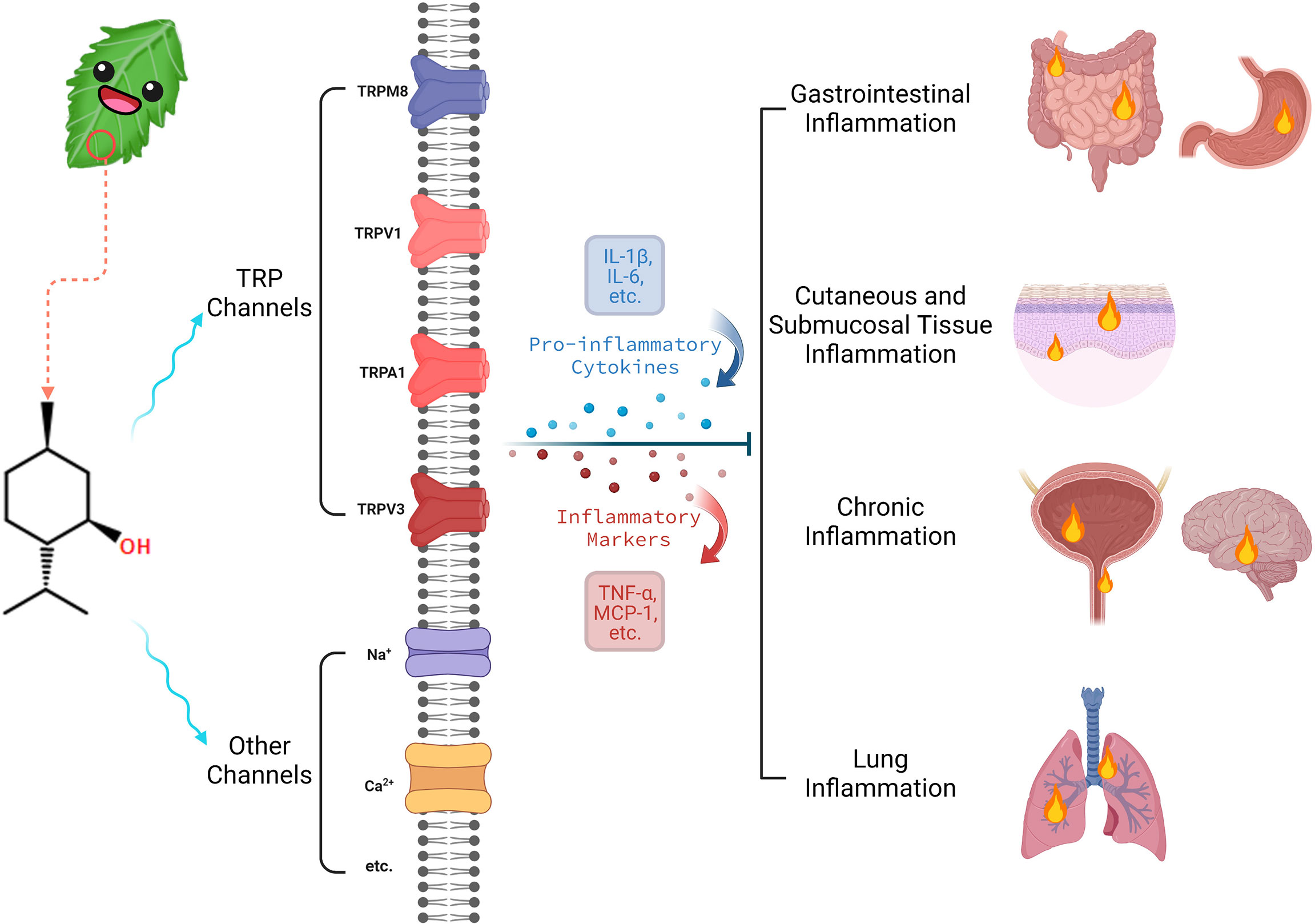
Chamomile contains flavonoids such as apigenin, a molecule that can bind to benzodiazepine receptors in the brain, not strongly enough to sedate, but enough to shift neural signaling toward calm. Peppermint’s dominant compound, menthol, interacts with TRPM8 ion channels, altering sensory perception and relaxing smooth muscle in the gastrointestinal tract, which is why discomfort often fades rather than disappears. Green tea is chemically more complex, carrying both caffeine and L-theanine. Caffeine antagonizes adenosine receptors, increasing alertness, while L-theanine modulates glutamate signaling and promotes alpha brain wave activity. The result is not stimulation alone, but a controlled one, where opposing molecular effects coexist rather than cancel each other out.
Absorption, metabolism, and why effects are subtle
Most tea compounds are present at low concentrations, and the body treats them cautiously. Polyphenols are often poorly absorbed and are quickly conjugated in the liver through methylation, sulfation, or glucuronidation, which changes their activity and shortens their lifespan. Some effects come not from the original compounds at all, but from their metabolites or from interactions with gut microbiota. This layered processing is why medicinal teas rarely feel immediate or dramatic. Their chemistry is filtered repeatedly before it ever becomes physiological experience.
The limits of gentle molecules
Because teas are chemically mild, their effects depend on repetition rather than force. They rarely override pathways; they modulate them. This also means they are not universally safe. Compounds that influence enzymes, receptors, or transporters can interfere with medications or accumulate with excessive use. The difference is scale, not nature. Medicinal tea is not separate from pharmacology—it exists at its quiet edge.
 The Biochem Journal
Leave a comment